About

Ezekiel Kwetchi Takam is a teaching assistant and doctoral candidate in theological ethics at the University of Geneva. His research, conducted from an interdisciplinary perspective, examines the theological and political implications of artificial intelligence. More specifically, it explores how conceptual and methodological resources from theological and Afro-religious studies can contribute to a critical analysis of the power dynamics underlying the development and deployment of general artificial intelligence. Drawing on his research experience (which began over five years ago, after completing his undergraduate degree), he founded and officially launched the Euro-African Observatory of Artificial Intelligence in February 2020.
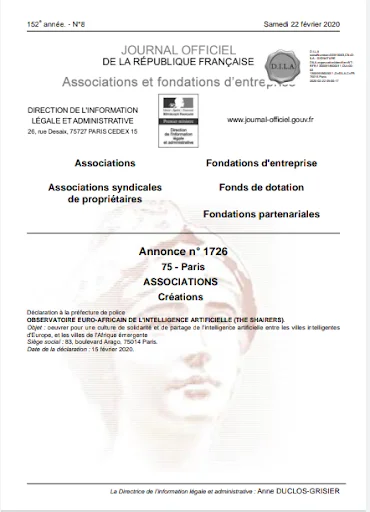
The story behind the creation of this think tank is both amusing and intriguing. It all started with a date: January 6, 2020. Looking to fill his free time by browsing Google's informational universe, his search algorithm directed him to an article published in the journal Nature entitled "Artificial Intelligence: The Global Landscape of Ethics Guideline." Published in 2019 by researcher Anne Jobin, this study analyzes the points of convergence and divergence between different ethical principles and codes of artificial intelligence. To do so, the authors used a database of 84 ethical documents and reports. After observing the geographical distribution of these publications, it appears that Africa is one of only two regions in the world (along with South America) that has not produced any reports, principles, or ethical codes governing the research, development, and deployment of artificial intelligence within its borders. This is regrettable for a continent that is increasingly becoming a coveted market. The Stanford Social Review, in its February 12, 2018 article, uses the word "invasion" to describe and/or highlight the intensity of enthusiasm, interest, and attraction that Africa represents in the global market for artificial intelligence research and development. The MIT Review reinforces this observation in its June 21, 2019 article with the highly evocative title: "The Future of AI (Artificial Intelligence) Research Is in Africa." Faced with this situation and concerned with contributing to the development of an ethical framework in Africa, Ezekiel Takam decided to establish the Euro-African Observatory for Artificial Intelligence, whose mission will be to build an ethical culture of artificial intelligence in Africa. On November 12, 2021, as part of the International Entrepreneurship Week organized by the University of Geneva, he was awarded the Geneus-Fongit Prize (Best Idea - Life Sciences Prize awarded by the Geneus incubator of the Geneva Foundation for Technological Innovation), which recognized the Observatory.
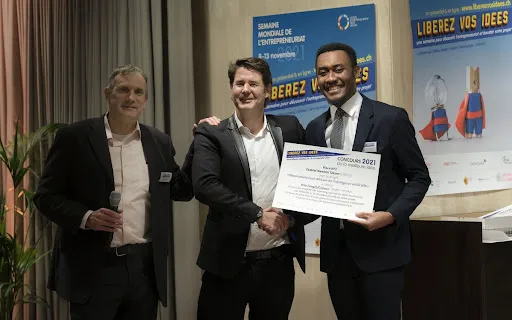
To carry out this mission in a transparent and productive manner, he is supported by an advisory committee.
Advisory Committee
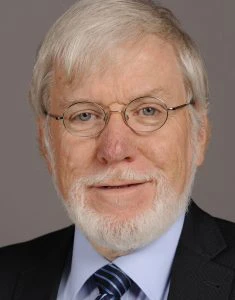
Christoph Stückelberger
Christoph Stückelberger is the founder of the Globethics.net Foundation, based in Geneva, Switzerland, with ten offices across four continents. He is Professor Emeritus at the University of Basel, Distinguished Professor at the Moscow State Technical University (MEPhI), and a Visiting Professor at the Government of Ouagadougou (GOU) University in Enugu, Nigeria, and at the Kingdom Business College in Beijing, China. He received an honorary doctorate (Dr. hc) from the University of Kinshasa (UPC) in the Democratic Republic of Congo for his long-standing commitment to Africa. His main research areas are economic/business ethics, commercial ethics, financial ethics, political ethics, development ethics, environmental ethics, and philanthropy. He has published numerous books and hundreds of articles on applied ethics, including cyberethics, as both author and editor.

Jules Yimeumi
Jules Yimeumi has been a data protection specialist for several years. He currently holds the position of Data Protection Officer at Mutex. He is also the founder of Africa Data Protection, a monitoring platform that regularly provides an overview of data protection in Africa.

Peter Stokes
Peter Stokes is Director of Studies in Digital and Computational Humanities Applied to the Study of Ancient Writing (EPHE-PSL). His research focuses primarily on the theoretical and practical questions related to the description and analysis of handwriting, particularly multigraphism (the simultaneous use of different scripts or writing systems in a given culture), especially in medieval Europe, combining the fields of paleography, digital humanities, and computer science. After graduating with honors in Classics and English Literature and in Computer Engineering from the University of Melbourne in Australia, Peter Stokes earned a PhD from the University of Cambridge on early 11th-century English paleography. He worked at the Centre for Computing in Humanities (now the Department of Digital Humanities) at King's College London.

Vincent Ledoux
Vincent Ledoux is a member of the French National Assembly. He sits on the Finance, General Economy, and Budgetary Control Committee and co-chairs the study group on economic diplomacy with Africa. Author of the report on France's African priority, he is a strong advocate for a new, responsible, and collaborative cooperation between Africa and Europe. A patron of the Euro-African AI Observatory since its inception, he has contributed his expertise and experience to the implementation of concrete projects (symposia and conferences) aimed at promoting AI ethics from a Euro-African perspective.

Sylvie Guérin
Founder of STG Leadership – Talent Manager. She has 22 years of experience in human resources management for international groups as a compensation specialist and talent manager, and for the past 9 years has led STG Leadership – a human resources consulting and management and leadership training firm. Sylvie supports companies in developing and implementing their human resources policies, as well as in developing leadership, management, and teams in changing environments.
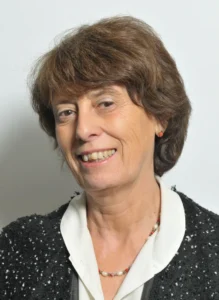
Chantal Berger
A magistrate and Honorary Advocate General, Chantal Berger still serves in the Public Prosecutor's Office at the Paris Court of Appeal. In her view, artificial intelligence is crucial for the future of our society, enabling us to continue improving the lives of all and advancing our knowledge and science. This is the sole objective that must be pursued, and therefore, oversight is essential to prevent its misuse. She is acutely aware, through her professional experience, that any progress in science and technology can be exploited by malicious individuals for their own gain. Hence her interest in the Euro-African Observatory of Artificial Intelligence.
Janine Kister
Janine Kister worked for over 45 years at the Ministry of Justice. During her time at the Ministry's central administration and since her retirement in March 2010, she has participated, as a short-term expert, in cooperation missions, notably for the Ministries of Justice of Poland, Morocco, West African countries (Benin, Burkina Faso, Ivory Coast, Mali, Mauritania, Niger, DRC, Central African Republic, Senegal, etc.), as well as Lebanon, focusing on improving access to justice, managing change, training judicial personnel, and modernizing the courts. Drawing on her professional and international experience, she plans to contribute, through her expertise, to the Observatory's objective: to foster an ethical culture of artificial intelligence, both in popular and scientific culture, recognizing its broad potential to transform businesses and the relationship between humans and technology.