Events

Artificial intelligence: the ultimate transcriber of ancient writings?
- On January 26, 2022 from 8:00 PM to 9:17 PM
- https://youtu.be/1ceEmGYJzAk
This conference explored the contribution of AI applied to the analysis and automatic transcription of ancient texts. We had the pleasure of speaking with Peter Stokes, Director of Studies in Digital Humanities at the École Pratique des Hautes Études (EPHE-PSL).

Solidarity and sharing of artificial intelligence: for shared prosperity
- On May 4, 2021 from 12:30 to 13:30
- https://youtu.be/soy9zjRiqpg
In the face of globalization, which defines our era, this conference aimed to analyze the dynamics of solidarity and sharing of artificial intelligence between Europe and Africa. We had the pleasure of speaking with Cédric Villani, Fields Medalist mathematician (2010).
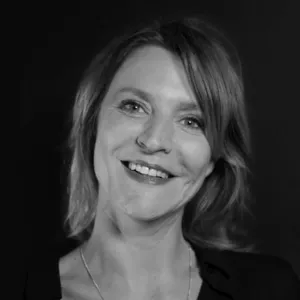
School 42 and the place of women in the digital world.
- On April 13, 2021 from 8:00 PM to 9:00 PM
- Zoom
For our #8 conference and debate, we explored, with Sophie Viger, the role of women in the world of new technologies. The speaker is the director of École 42 and was named IT Personality of the Year 2019 by Le Monde Informatique.

5G and its challenges
- On March 30, 2021 from 8:00 PM to 9:30 PM
- zoom
For our #7 conference and debate, we examined the role of mobile telephony in our society. Specifically, we explored the challenges of 5G technology deployment from various perspectives: economic, energy, environmental, social, psychosocial, and health-related aspects. We had the pleasure of speaking with Dr. Marco Congedo, a researcher at the French National Centre for Scientific Research (CNRS) and a specialist in brain-computer interfaces.

Artificial intelligence law in Africa and Europe: what are the challenges and prospects?
- On February 16, 2021 from 8:00 PM to 9:00 PM
- https://youtu.be/CDQSdvNj__U
Speaking of artificial intelligence law, what are the challenges and prospects? To answer this question, we had the pleasure of speaking with Sonia Cissé, a lawyer at Linklaters specializing in new technologies.
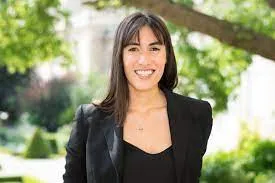
Digital technology in times of crisis
- On February 1, 2021 from 8:00 PM to 9:00 PM
- https://youtu.be/QHUiJ141Ckw
Whether in Africa or Europe, it is undeniable that the Covid-19 crisis has disrupted our lifestyles (work patterns, public service organization, etc.). What role does digital technology play in this crisis? What is its relationship to the concept of change? We discussed these questions with Member of Parliament Paula Forteza, author of the report "Quantum: The Technological Shift France Will Not Miss.".

The ethics of innovation
- On December 1, 2020 from 8:00 PM to 9:00 PM
- https://youtu.be/7QdbTdArtMo
We had the pleasure of speaking with MP Valéria FAURE-MUNTIAN, member of the digital ethics steering committee (under the aegis of the National Consultative Ethics Committee), member of the Parliamentary Office for Scientific and Technological Assessment (OPECST), and member of the "Cybersecurity and Digital Sovereignty" study group.

Is an African GDPR possible?
- On November 10, 2020 from 8:00 PM to 9:00 PM
- https://youtu.be/ZGzR5ncJs6I
What is Africa's position in the geopolitics of data conquest and protection? Can we, or will we be able to, speak of an African GDPR? What exactly is the GDPR? To answer these questions, we had the pleasure of speaking with Jules Hervé Yimeumi, a legal expert specializing in data protection and founder of the blog Africa Data Protection.

Innovation during Covid: an overview
- On October 27, 2020 from 8:00 PM to 9:00 PM
- https://youtu.be/zu85xpHVoZc
The word "crisis" in Chinese culture is composed of two ideograms: Wei (danger) and Ji (opportunity). Thus, a crisis is perceived as a platform encompassing difficulties and dangers, while simultaneously offering crucial opportunities to seize. Based on this definition, we wanted to explore the interplay between Covid and innovation: has the Covid-19 crisis been a catalyst for opportunities or, on the contrary, a threat to innovation? In other words, and from a broader perspective, what is the state of innovation in the face of Covid-19? To answer these questions, we had the pleasure of speaking with Dr. Leila Delarive, a technology entrepreneur, CEO of Amplify, and founder of the Empowerment Foundation.

The impact of artificial intelligence on the world of work.
- On October 5, 2020 from 8:00 PM to 9:00 PM
- https://youtu.be/Ok7g7MlG_Uo
Artificial intelligence is revolutionizing our lives, politically, socially, and economically. What is its impact on work? Will it make workers more efficient, or on the contrary, superfluous or even useless? What are its positive and negative contributions? These were the questions around which our conference-debate (webinar) on October 5, 2020, was structured. We had the pleasure of speaking with Justine Dima, a doctoral candidate at Laval University. Her research examines perceptions of the use of artificial intelligence in the workplace.